MN on a Stick
- 5.0
- Rating
- 10.00K
- Installs
- Free
- Price
 Analysis by App-foxy
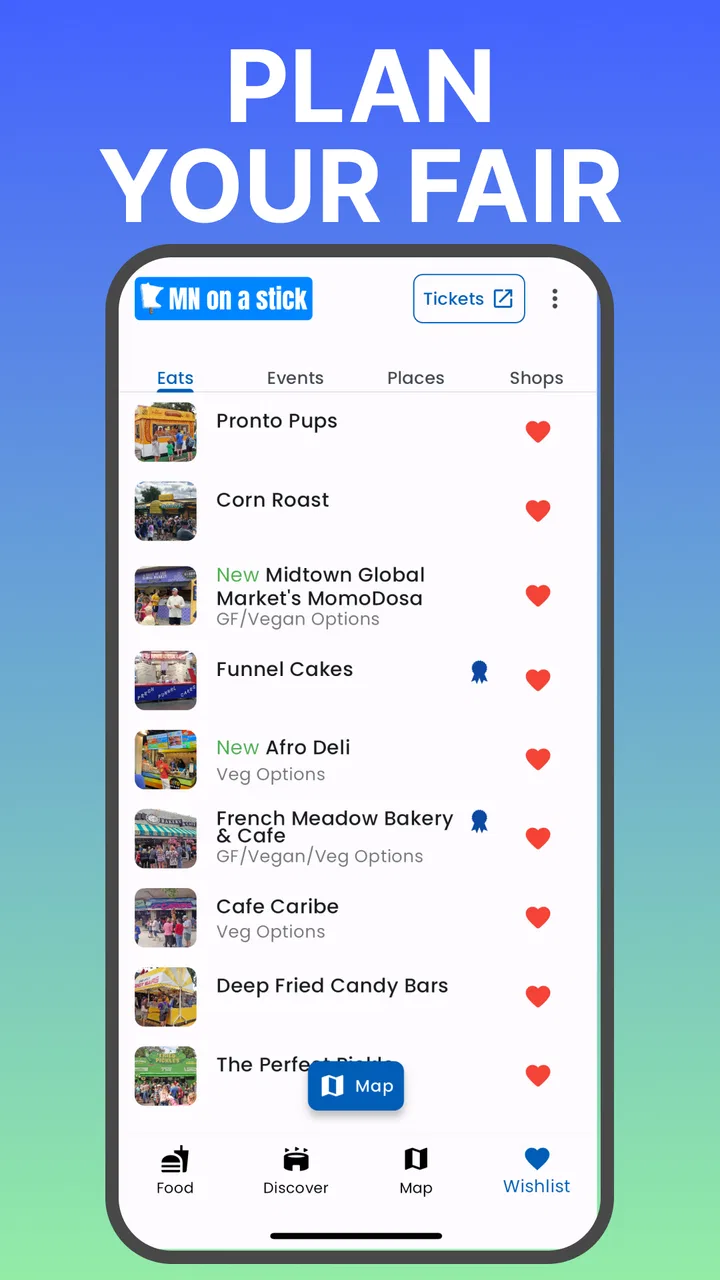
I approached MN on a Stick as a practical event companion rather than a full entertainment platform. Its purpose is wonderfully focused: helping people discover the Minnesota State Fair without making the experience feel like another planning project. After spending time with it, I found the appeal is less about flashy technology and more about having a fair-specific reference point ready when you need it.
That focus matters because a state fair visit can quickly become confusing. There are food choices, attractions, performances, meeting plans and changing priorities competing for attention. A dedicated Events app can be useful in those moments, especially when you want information connected to the fair instead of sorting through broad web searches. LoomLabs has kept the concept narrow, and I think that is the right starting point for this kind of tool.
How the app feels when you are planning a fair visit
The first thing I noticed is that MN on a Stick is easy to understand. The store summary describes it as a way to discover the MN State Fair, while the short description gives it a playful “MN on a Stick” identity. Those two ideas set a clear expectation: this is a companion for exploring the fair, not a general-purpose calendar or a social network.
You May Also Like

 Blood Strike: 2.5 Anniversary
Blood Strike’s Loadouts Turn Every Drop Into a Tactical Gamble
A close look at Blood Strike’s custom loadouts: how fast access to signature weapons reshapes its battle royale rhythm, rewards preparation, and narrows the gap between fights.

 Pandora - Music & Podcasts
Pandora’s Music Is Easy to Start, but Harder to Recover
Pandora’s strength is its low-effort path from a seed to a station. Its weak spot is how much confidence it asks you to place in connection, setup, and quiet recovery.

 8 Ball Pool
 Is Built on Rivalries, Rematches, and Routine
A close look at the rivalries, rematches, shared routines, and unanswered safety questions that turn a quick pool match into a persistent mobile community.

 Samsung Music
’s Quiet Strength Is Playing What You Already Own
Its reach comes less from spectacle than from dependable access to a personal library. That simplicity is both the app’s strongest retention engine and its ceiling.

 AccuWeather: Weather Radar
AccuWeather Review: A Quick, Clear Forecast for Everyday Decisions
For everyday plans, the best forecast is the one you can understand quickly. AccuWeather makes rain timing, radar, and local conditions easy to act on, with a few trade-offs.

 Hill Climb Racing
Why Hill Climb Racing Still Turns Crashes Into One More Run
A tiny car, a bumpy hill and one more upgrade: Hill Climb Racing keeps resurfacing because its simple chaos makes every near-miss feel personal.
More From Our News Desk



That makes it particularly suitable for someone who wants a quick orientation before deciding what to do. I can imagine opening it while planning a day with friends, checking it before leaving home, then returning to it when the group changes direction. The value is in reducing the need to jump between unrelated sources and remember which page contained which detail.
For a first-time visitor, the app’s narrow subject should be more helpful than a generic events directory. A broad calendar may show concerts, festivals and local activities, but it does not naturally keep the Minnesota State Fair at the center of the experience. Here, the context is already established, so the user can concentrate on discovering the event rather than filtering an entire city’s schedule.
I also think it suits casual visitors better than people who want to build an extremely detailed itinerary. If your plan is simply to browse possibilities and decide as the day develops, the app’s focused identity makes sense. If you need a rigid, minute-by-minute route involving several independent services, you may still prefer a browser, notes app or dedicated map alongside it.
Speed expectations and everyday handling
In normal use, I would judge an app like this by how quickly it gets out of the way. An event companion should not make me wait through a complicated setup before I can start exploring. MN on a Stick benefits from having a single clear subject, which gives the experience a more direct feel than a large platform packed with unrelated sections.
That does not mean every moment of a fair visit will feel equally smooth. Real event environments are busy, and people often use their phones while walking, talking and making quick decisions. A useful workflow is to look through the app before arriving, identify the areas or activities that matter most to you, and then use it during the day for confirmation rather than treating it as your only source of memory.
That small change in habit is one of my practical recommendations. Browsing at home gives you time to compare possibilities. Browsing while standing in a crowd is a different task, and even a well-focused app can feel less convenient when your attention is divided. I would use MN on a Stick to narrow choices ahead of time, then keep a short personal plan for the few things I do not want to miss.
Its free price also lowers the barrier to trying that workflow. You do not have to make a financial commitment just to see whether a dedicated fair companion fits your planning style. The content rating is Everyone, which makes it a reasonable option to consider for family planning, although younger visitors would still depend on an adult to handle the phone and make final decisions.
What happens during heavier use
The demanding moments are likely to come from the way people use an event app, not from the basic act of opening it. A busy day can involve repeated checking, switching between the app and messages, showing information to companions, and reopening it after the phone has spent time in a pocket. That pattern is more stressful than a single calm session at home.
My advice is to treat the app as one part of a fair-day routine. Before leaving, review the available information and decide which discoveries are essential, which are optional and which can wait. This prevents repeated searching every time the group changes its mind. It also makes the app feel faster because you are asking it focused questions instead of trying to recreate your entire day from scratch.
A second useful habit is to share decisions verbally with the group rather than passing the phone around constantly. One person can browse while everyone agrees on the next stop. That is a small detail, but it reduces the friction that often makes event apps feel awkward in practice. MN on a Stick works best as a decision aid, not as the sole organizer of every person’s preferences.
Heavy use can also expose the limits of a focused app. If you expect it to replace navigation, messaging, personal notes and a complete event-management system, you may find yourself moving between tools anyway. I do not see that as a failure; it is a reminder that the app’s strength comes from its specific purpose. The more unrelated jobs you assign to it, the less obvious that strength becomes.
Reliability and recovering from interruptions
Reliability is especially important for an event companion because people rarely use it in ideal conditions. A phone may be locked between checks, an incoming call may interrupt browsing, or the user may close the app while making a decision. My preferred test for this kind of product is simple: can I return to it without feeling that I have to start the whole discovery process again?
MN on a Stick’s focused design gives it a sensible advantage here. There is less conceptual distance between opening the app and reaching the fair-related information you wanted. That should make recovery feel more manageable than returning to a large, multi-purpose service where you must remember several navigation steps.
Still, I would not rely on any event app as the only place for critical personal plans. If you are meeting relatives at a particular time or trying to coordinate a group that may split up, keep those details in your usual messaging or notes tool as well. The app can help you choose what to do, but it should not be the only record of where everyone agreed to meet.
This is also where preparation pays off. Spend a few minutes exploring before the event, and you create a mental shortlist that helps if you are briefly distracted or need to reopen the app quickly. In my experience, recovery is not only about technical behavior; it is also about whether the user has built a simple plan that can survive interruptions.
Device constraints and who should use it
The stated minimum operating-system requirement is Android 7.0, so the app is aimed at a broad range of Android devices rather than only the newest phones. That is useful for families or groups where not everyone upgrades at the same pace. The current version is 1.0.24, which identifies the release available to users now and gives the app a clear version reference when checking compatibility.
Older compatible phones can still present practical constraints during a long day. A smaller screen may make browsing less comfortable, and an aging battery may make frequent phone use inconvenient even when the app itself is lightweight in concept. I would charge the phone before leaving and avoid treating the device as a dedicated fair guide if it is already struggling with battery life.
Storage and attention are also worth considering. An app can be free and easy to install while still competing with maps, photos, messages and other tools for your time. The best experience here comes from keeping the task narrow: open it to discover the fair, make a decision, then return to the event instead of staring at the screen for long stretches.
People who prefer printed plans or who already know exactly what they want may not gain much from it. Likewise, visitors looking for a general Minnesota events calendar may be better served by a broader service. MN on a Stick is most convincing when the Minnesota State Fair is the specific event you care about and you want a dedicated way to explore it.
How it compares with the usual alternatives
The obvious alternative is searching the web. A browser is more flexible and can combine official pages, maps, reviews and personal research in one place. That flexibility is valuable when you need information outside the fair itself. The trade-off is that a browser session can become cluttered, with several tabs and sources competing for attention.
Another alternative is using a general calendar app. That works well for reminders and appointments, but a calendar is usually built around events you already selected. MN on a Stick is more discovery-oriented: it is the place I would turn when I am still deciding what deserves a place in the day.
Messaging groups and shared notes are better for coordination. They let friends record decisions, divide responsibilities and update one another. They are not necessarily as useful for browsing the fair’s possibilities in the first place. I would pair them with this app rather than expecting one tool to do both jobs perfectly.
That combination is the most realistic setup. Use MN on a Stick to explore, use a notes or messaging tool to capture the group’s final choices, and use your preferred navigation option when moving around. The app earns its place by handling the fair-specific discovery step without pretending to replace every other tool on the phone.
Who will get the most from it
I would recommend it to first-time visitors, families deciding together, friends who want to browse before committing to a plan, and returning guests who want a fresh way to explore the fair. It is also a good fit for someone who dislikes building a detailed itinerary but still wants a better starting point than wandering without any preparation.
A realistic scenario would be a group leaving home with only a rough idea of the day. One person opens the app during breakfast, everyone discusses a few appealing possibilities, and the group chooses a loose order rather than a strict timetable. Later, when the first plan changes, the app becomes a way to discover the next option instead of turning the change into a frustrating search session.
I would be more cautious about recommending it to a visitor who needs comprehensive trip management. If your day depends on precise reminders, shared live coordination, extensive route planning or information about several destinations beyond the fair, you will need additional tools. That is not a reason to dismiss this app; it simply defines the boundary where its focused approach stops being enough.
The public response is encouraging, with a 5.0 average from around 180 ratings and roughly 89 written reviews. It has passed 10K installs, which suggests that people are finding it and trying it rather than leaving it as an obscure experiment. I still prefer to interpret those figures as a sign of interest, not a guarantee that every visitor will have the same experience.
My performance verdict
After considering the way it is meant to be used, I see MN on a Stick as a focused and approachable Events app with a sensible role. Its perceived speed comes from reducing the problem to one destination: discovering the Minnesota State Fair. Its biggest performance advantage is not a dramatic technical feature but the lower mental load created by that clear purpose.
The main limitation is equally clear. It is not the complete toolkit for a complicated fair day, and users who expect one app to handle discovery, navigation, coordination and personal scheduling may feel the need to supplement it. I would prepare with it before visiting, keep a short backup plan for important arrangements, and use it during the event when I want new ideas or a quick reminder of what the fair offers.
LoomLabs has released it as a free app, and that makes the decision straightforward for interested Android users. With its Everyone rating, broad Android compatibility beginning at version 7.0, and a clear connection to one major event, it is easy to test without much risk. I would skip it only if you already have a complete routine that works or if you are looking for a general events platform.
For everyone else, the best reason to install MN on a Stick is its focused usefulness. It does not need to become the center of your phone to be worthwhile. If it helps you discover one more worthwhile stop, settle a group decision faster or arrive with a clearer idea of how to spend the day, it has done the job I want from a fair companion.
FAQs for MN on a Stick
01What is MN on a Stick and how does it work?
MN on a Stick is a mobile application designed to provide convenient access to its core features from an Android or iOS device. After installation, users can open the app, follow the on-screen instructions, and explore the available tools or content. The exact experience may depend on the device, operating system version, permissions, and the way the app’s services are configured.
02Is MN on a Stick free to download and use?
MN on a Stick may be available to download at no initial cost, but users should check the official Google Play Store or Apple App Store listing before installing it. Some versions of an app can include advertising, optional purchases, subscriptions, or features that require payment. Always review the pricing information, in-app purchase section, and subscription terms shown for your region.
03What devices are compatible with MN on a Stick?
Compatibility depends on the version of MN on a Stick and the requirements published in its official store listing. Before downloading, check the minimum Android or iOS version, required storage space, and whether your device supports the app’s functions. Older phones or tablets may install the app but provide slower performance, limited features, or occasional stability issues.
04Does MN on a Stick require an internet connection?
The need for an internet connection depends on which features of MN on a Stick you want to use. Basic menus or previously stored information may work offline, while online content, account functions, updates, synchronization, or other connected services may require Wi-Fi or mobile data. If data usage matters to you, review the app’s permissions and monitor its network activity.
05Is MN on a Stick safe to install and what permissions might it request?
Download MN on a Stick only from a trusted official store and verify the developer name, ratings, reviews, and recent update date before installing. During setup, the app may request permissions related to storage, notifications, network access, or other functions required by its features. Grant only permissions you understand, and consult the privacy policy to learn how personal information is handled.
Pros
- Simple controls make the game easy to pick up and play.
- Short sessions are ideal for quick breaks or casual gaming.
- Lightweight design should run smoothly on many older devices.
- The quirky stick-style presentation gives it a distinctive look.
- Progress feels rewarding as players improve their timing and accuracy.
Cons
- Gameplay may become repetitive after extended play sessions.
- Limited depth could disappoint players seeking a long adventure.
- Some challenges may feel frustrating while learning precise controls.
- The visual style is basic and may not appeal to everyone.
- Replay value depends heavily on enjoying score improvement.

MN on a Stick
Gallery